Career XRcade · Verizon Innovative Learning
Career XRcade
“How do you make a future career feel real before you've ever lived it?”
Knowing about a career isn't the same as imagining yourself in one. For first-generation students, that gap is structural, you need exposure to even know what to ask.
As AI reshapes work, imagination and creative self-efficacy matter most, and are the hardest to teach. Let students inhabit a career, then measure whether it shifts what they believe they can do.
Defined the platform structure: the hub-and-exhibit world model, 5 career paths, and the interaction grammar connecting each mini-game to real job responsibilities.
Developed the 4-pillar design framework (narrative role-play, game-based learning, embodiment & presence, instructional scaffolding) that drove every design decision across the platform.
Designed and ran a mixed-methods pilot study (custom survey instruments, paired-samples t-tests, inductive thematic analysis) measuring gains in imagination, creative self-efficacy, and career interest.
Directed 20–25 student developers, 3D artists, and game designers across weekly design reviews, maintaining quality across 50+ mini-games over a multi-year production cycle.
Managed the Verizon Innovative Learning relationship, keeping scope tight, timelines honest, and the platform integration on track through global deployment.
Five careers, each one you step inside.
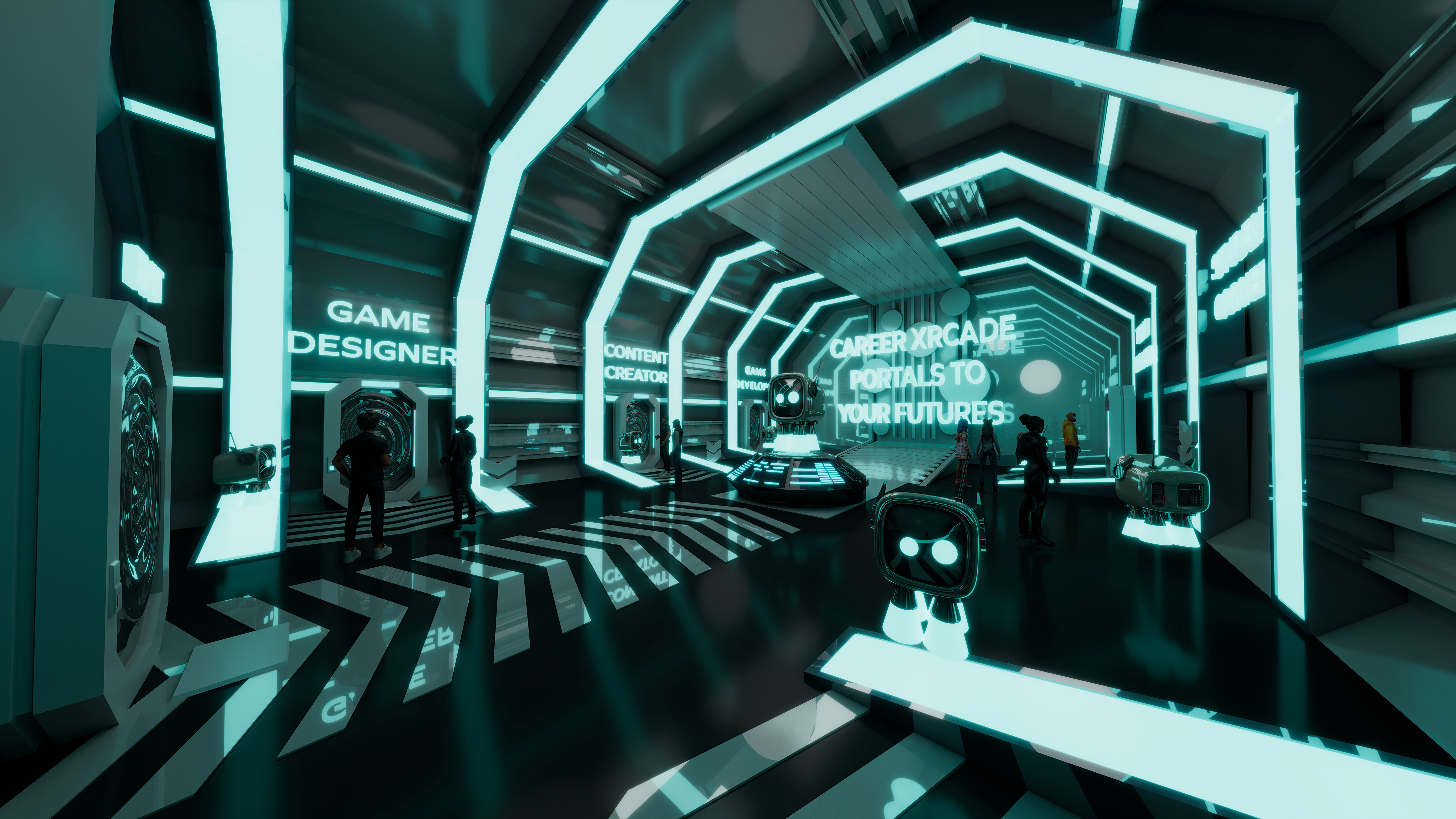
Students don't observe esports careers here, they inhabit them. A central hub with portals to five Career Exhibits, each turning a job title into something you step inside and try.
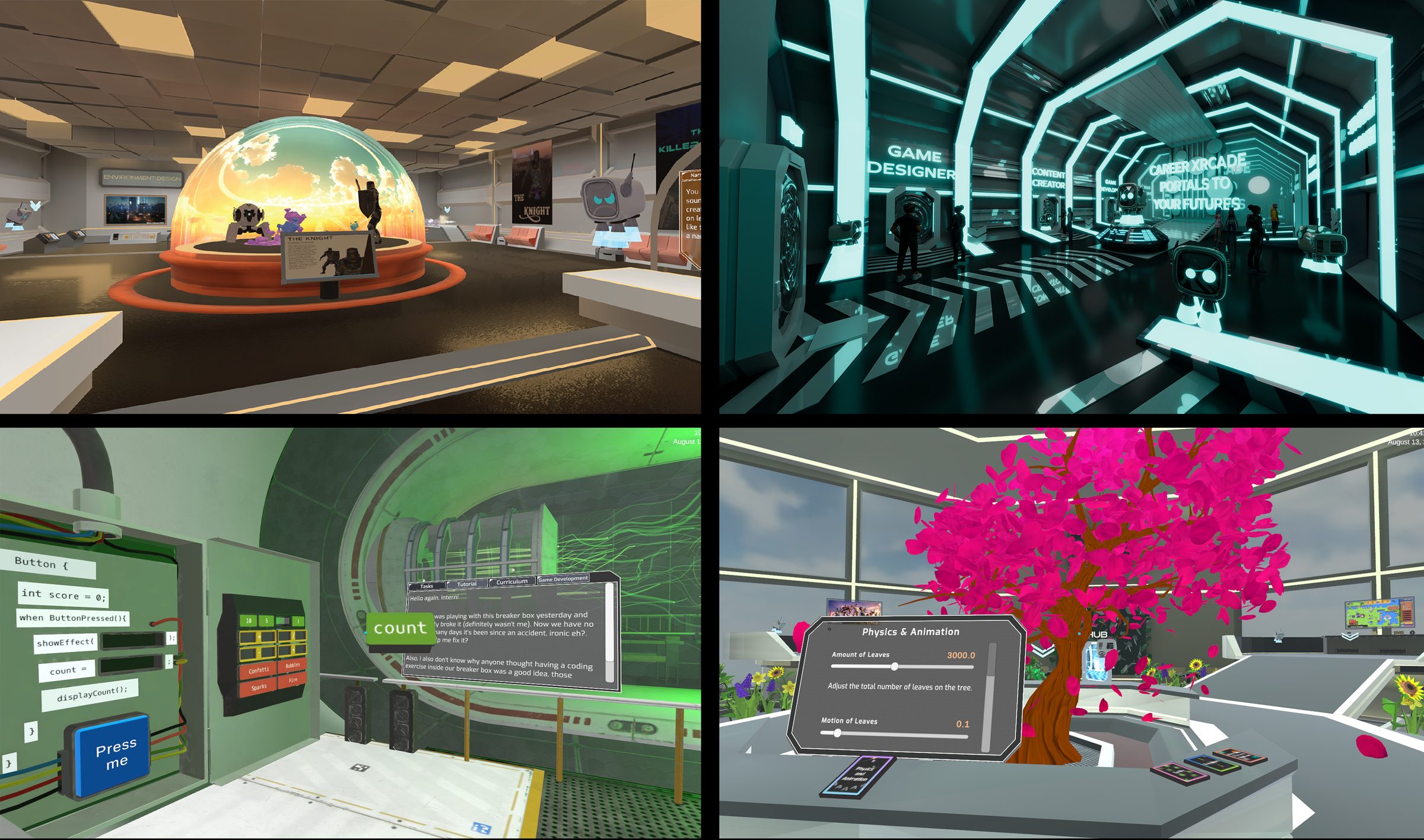
Students step into a virtual studio and build a game piece by piece, picking environments, characters, lighting, and sound from interactive booths until something comes to life.
A large virtual tree makes game engine fundamentals tangible. Students manipulate physics, shaders, and materials with hand controllers, learning 'transform' and 'animation' through direct experimentation. A code-block puzzle teaches algorithmic thinking.
Students take over as stand-in coach days before a championship, reading team performance, deciding where to push and where to hold back, and making calls with real consequences.
Students design merchandise booths and build out a marketing campaign inside a fully realized exhibit space, learning that creative instincts and commercial thinking belong to the same job.
Students grab a virtual microphone to practice shoutcasting, experiencing the embodied reality of live performance commentary before they know if they want to pursue it.
Making Futures Playable.
Four reinforcing principles, not a checklist, designed to grow imagination and creative self-efficacy together.
Learners are cast as protagonists in a Narrative Mission with clear goals and stakes. Story raises the emotional temperature; research on 'possible selves' shows that imagining yourself in a role is one of the most direct paths to wanting it.
Each exhibit is a mastery loop: attempt, immediate feedback (celebratory particles, audio confirmations), succeed. Each completed challenge is a tangible 'mastery experience', the most powerful driver of self-efficacy. A diegetic smartwatch menu keeps cognitive load minimal.
Students don't watch the role; they do it with their hands and body. Doing produces a different knowing than observing: the difference between reading about swimming and getting wet. Stylized, job-authentic environments sustain presence without photorealism.
The Holobuddy, an NPC guide, surfaces hints exactly when students stall, then steps back. Environmental cues (portals, elevators, sequenced tasks) give the space legibility without hand-holding, leaving room for students to try things and get them wrong.
Built by students, through the CXR Framework.
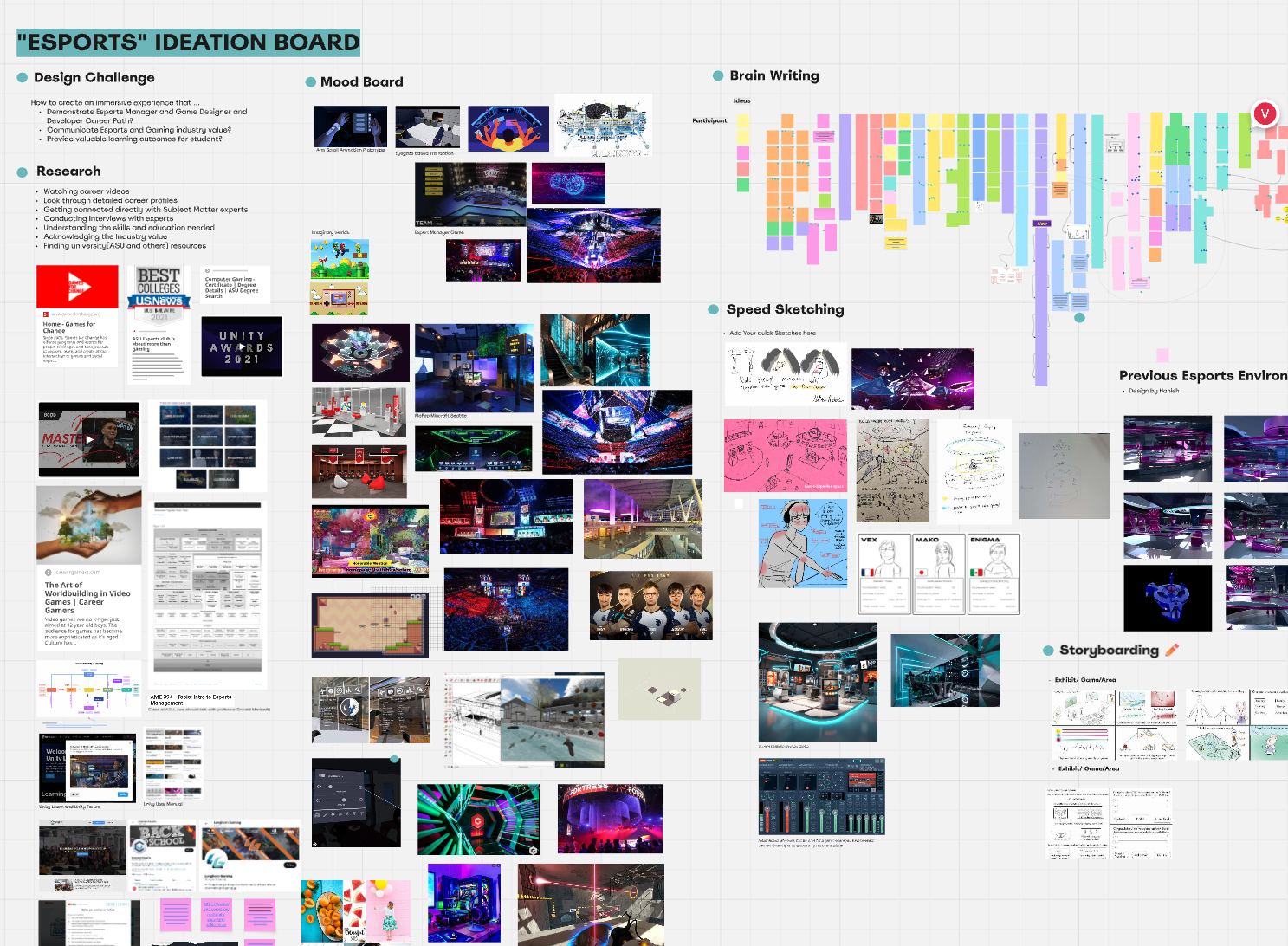
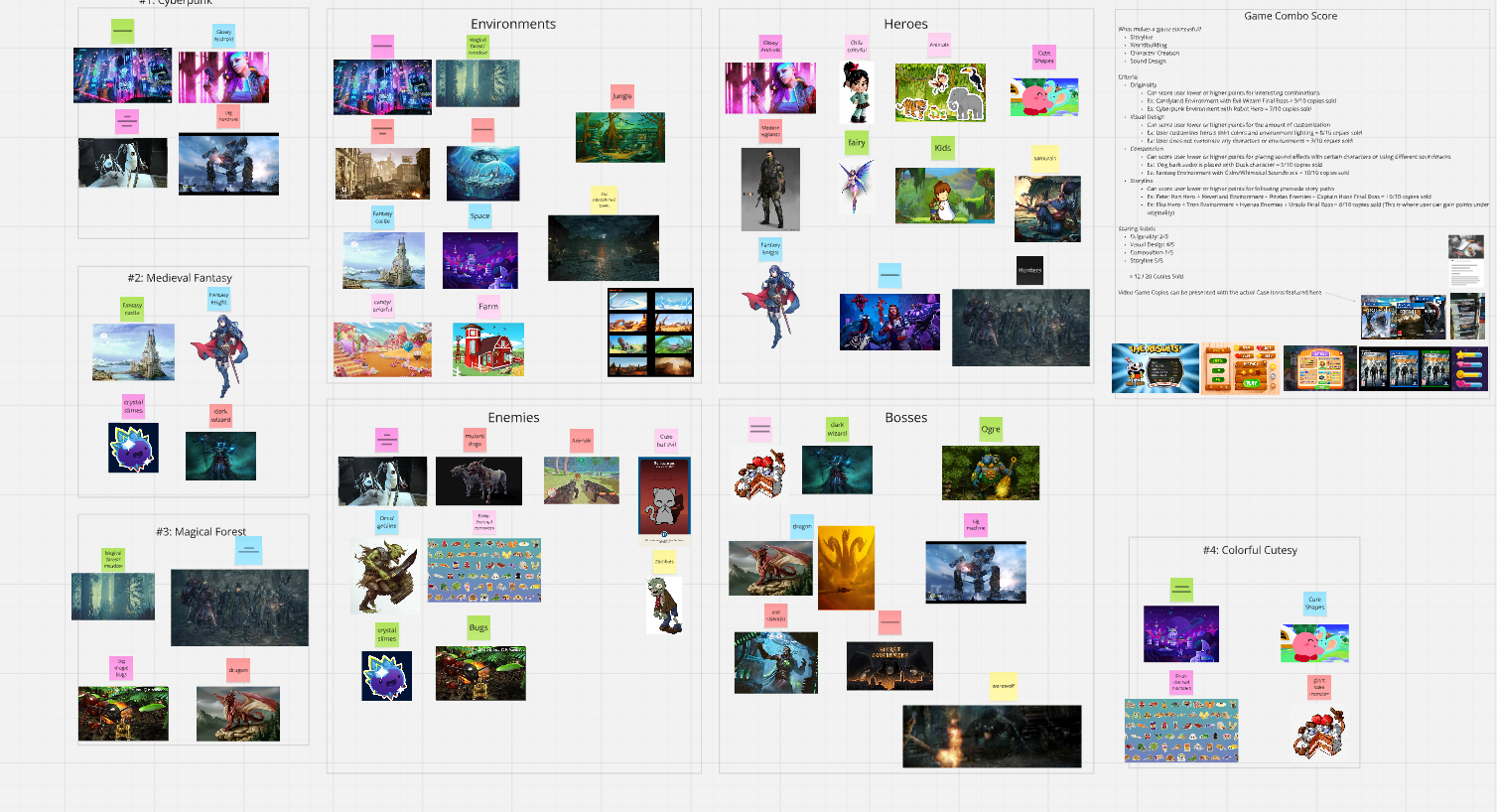
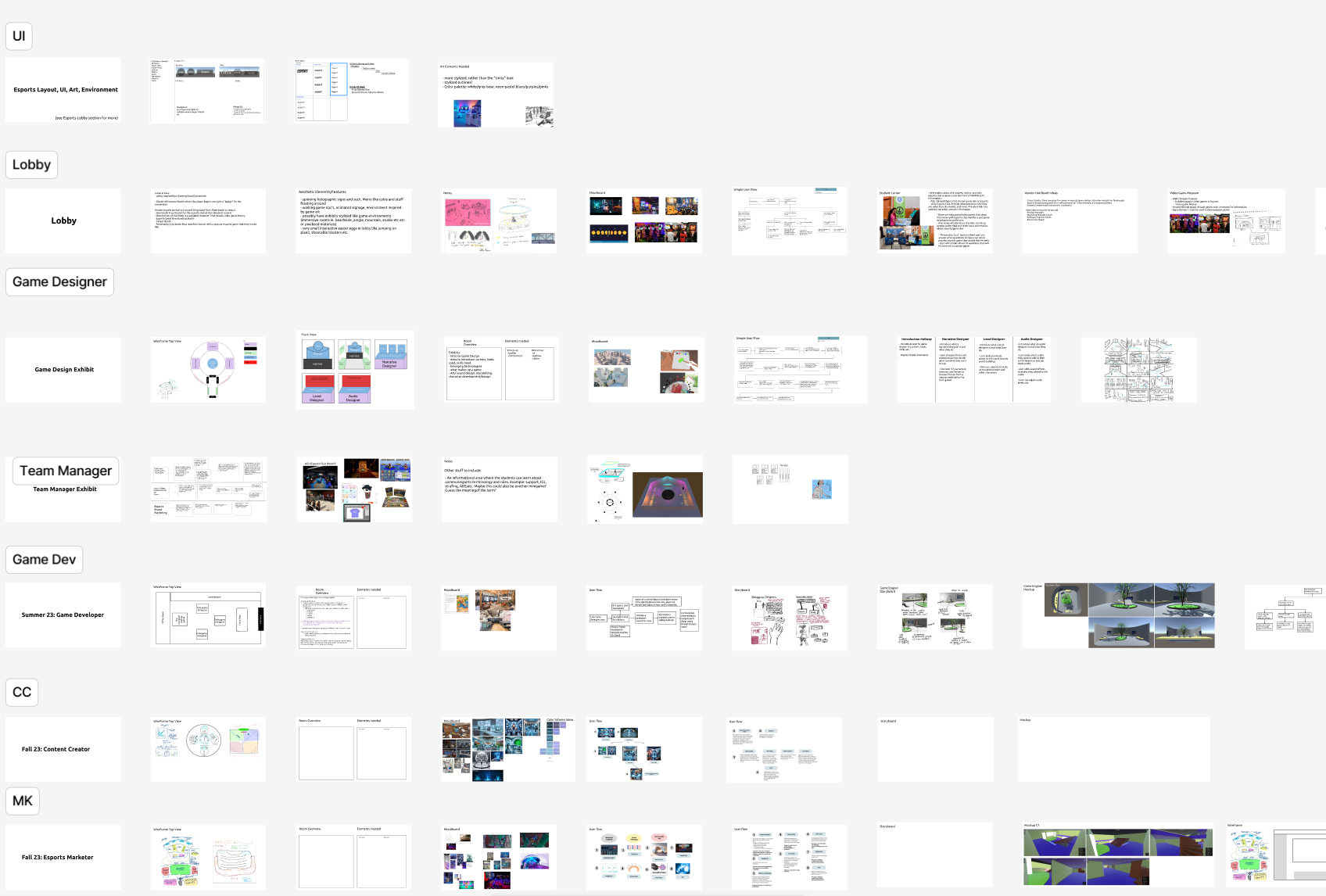
Built through the CXR Framework, a student-led co-creative model I developed: multidisciplinary teams co-designed each exhibit through ideation, storyboarding, prototyping, and playtesting. The process was part of the research, students gained developer identity and self-efficacy by building.
Each student was their own control.
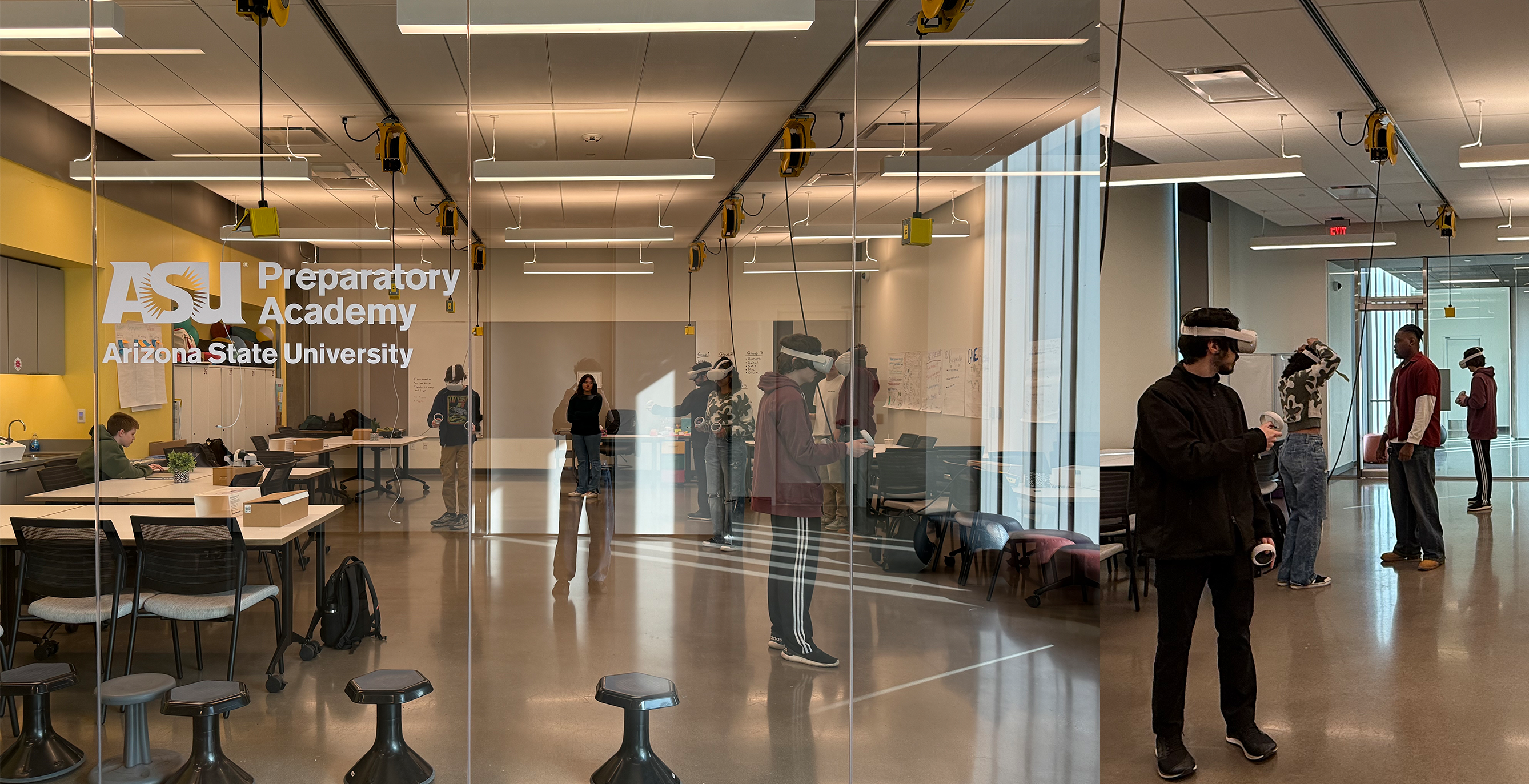
A within-subjects study at ASU Prep: pre-survey → 20-minute lecture → VR session, each student their own control. N=35, with 13 completing all phases.
Imaginative Capability didn't reach significance, a measurement limit, not a design one. The qualitative themes told the real story.
“The VR experience made it much more engaging and interesting, it was an experience rather than a lecture.”
Theme — Preference for Immersive Learning
“It helped me imagine being able to model and build a world as well as creating characters for that world.”
Theme — Enhanced Visualization & Tangibility
“It went from me not thinking I would want to do it, but now I want to try out more things related to this.”
Theme — Positive Shift in Self-Efficacy & Identity
- —Deployed globally through Verizon Innovative Learning's portal, distributed to high schools across the United States
- —Demonstrated at Games For Change Festival, New York (2024) and IEEE VR, Orlando (2024)
- —Presented at SXSW (2023) as part of ASU XRts Showcase
- —Developed in partnership with the J. Orin Edson Entrepreneurship + Innovation Institute and Meteor Studio at ASU