WIRED The Big Interview — San Francisco
Daniela Amodei used two words to describe what Anthropic is trying to build that I haven't stopped thinking about: warm but not addictive. Six hours at WIRED's Big Interview in San Francisco, and that was the phrase that kept surfacing as the through-line — not just for AI personality design, but for everything in the room. What does it actually give people, versus what does it take from them?
The Quad
Daniela Amodei described Anthropic's approach to AI personality in terms that are unmistakably a design brief. The "Quad": friendly but distant, warm but not addictive. Values and principles documents — human-readable, fed directly to the model. An entire research program dedicated to AI abuse and threats.
The constraint "warm but not addictive" is the kind of specification that comes from someone who has thought carefully about the difference between what a user wants in the moment and what serves them over time. It's the same distinction that separates good product design from engagement-optimized product design. Most AI companies don't name this distinction, document it, or build research infrastructure around it. Anthropic does. That is not a small thing.
The broken model
Matthew Prince from Cloudflare spent his session explaining something that should alarm anyone who makes things for the internet. Google AI Overview appears above search results. Users take the answer. They don't click. The traffic that funds every media business — and every independent creator — disappears. On July 1, Cloudflare launched what Prince called Content Independence Day: free tools enabling websites to block AI scrapers unless compensated. 400 billion AI requests blocked since launch.
The uncomfortable structural detail: Google merged its search crawler and AI crawler. You cannot block AI training without disappearing from search results entirely. This is not accidental. Google sees 3.2× more web pages than OpenAI, 4.6× more than Microsoft. That data advantage directly compounds Gemini's performance. The open internet is being consumed to train the systems that are replacing it.
Prince's observation about Reddit versus the New York Times is worth sitting with. Both have similar token counts in AI training data. Reddit earned 7× more in licensing fees. The reason: the NYT can be approximated by rewriting in the same style. Reddit — hyper-local, authentic, non-replicable — cannot. He owns a local newspaper in Park City, Utah, with a circulation of 4,000. After blocking AI scrapers, multiple AI companies contacted him to license the data. Unique, specific, honest content has a market. Derivative, polished, optimized content does not.
The business model of the internet is changing, he said — repeatedly. No one knows what it shifts to. But if businesses don't think ahead, the world may change beneath them. The old traffic model rewarded clickbait, polarization, and rage. LLMs represent the first mathematical model of human knowledge, and they have insatiable demand for content that cannot be replicated. For the first time, the economic incentive and the social value might actually align.
The missing metric
Dr. Eric Topol said something I keep returning to. It is nearly 2026 and medicine still cannot measure immune age clinically. We can measure cholesterol. We can measure CRP. We cannot say: your immune system is 10 years younger than your chronological age — or 15 years older, intervene now. Healthspan ends around 63–65. Lifespan runs to 80. That gap — approximately 15 years of chronic disease — is the problem medicine has not been designed to solve.
AI retina scans can predict heart disease and Alzheimer's seven years before symptoms appear. AI finds pancreatic cancer risk in electronic health records that look completely normal to a clinician. A few hundred dollars of testing could identify high-risk individuals early, years before the disease declares itself. We are not doing this. The problem is not technical. It is a prioritization problem — a question of what the system was built to optimize for.
GLP-1 drugs are reducing inflammation before a single pound of weight is lost. Their strongest effects occur before weight changes. Two-thirds of their cardiovascular benefits are independent of weight loss entirely. A trial starting in January will test their effect on Alzheimer's prevention in high-risk individuals aged 50 and above. We are at a historic turning point, Topol said. AI and biology are poised to reduce or prevent the major age-related diseases. The constraint is not scientific capability. It is the gap between what we can measure and what we choose to act on.
Resident computing
Michele Lawrence introduced the resident computing manifesto — signed by hundreds of people who have spent decades in Silicon Valley, arguing the industry has lost its way. The observation that landed: product decisions are evaluated against one question. Does this move the metric? Engagement, users, growth. The question never asked: at what cost? A balance sheet with only one side is not a balance sheet.
The manifesto is not anti-technology. It is anti-indifference. Its five principles — recognition, agency extension, pluralism, adaptivity, societal alignment — are not radical. They are the questions any designer who takes their work seriously is already asking in every project review. The fact that they require a manifesto to name them suggests how thoroughly those questions have been designed out of the process at scale.
The thread connecting all of it was the same. Every speaker was describing a system built without a clear answer to what it was actually for. Daniela Amodei is giving AI a values document because that clarity didn't exist at the foundation. Matthew Prince is building blocking infrastructure because the internet's original compensation model wasn't designed to survive what AI is doing to it. Dr. Topol is watching preventive medicine fail because the clinical system optimizes for treatment, not prediction. The resident computing manifesto exists because an entire industry got very good at moving metrics and stopped asking which metrics were worth moving.
The technology is extraordinary. The clarifying question is not new. It is the oldest design question: who is this for, and what does it actually give them? WIRED has been asking it for 30 years. The answers in that room suggest we are still at the beginning of an honest answer.

Daniel Lurie, Mayor of San Francisco — WIRED Big Interview
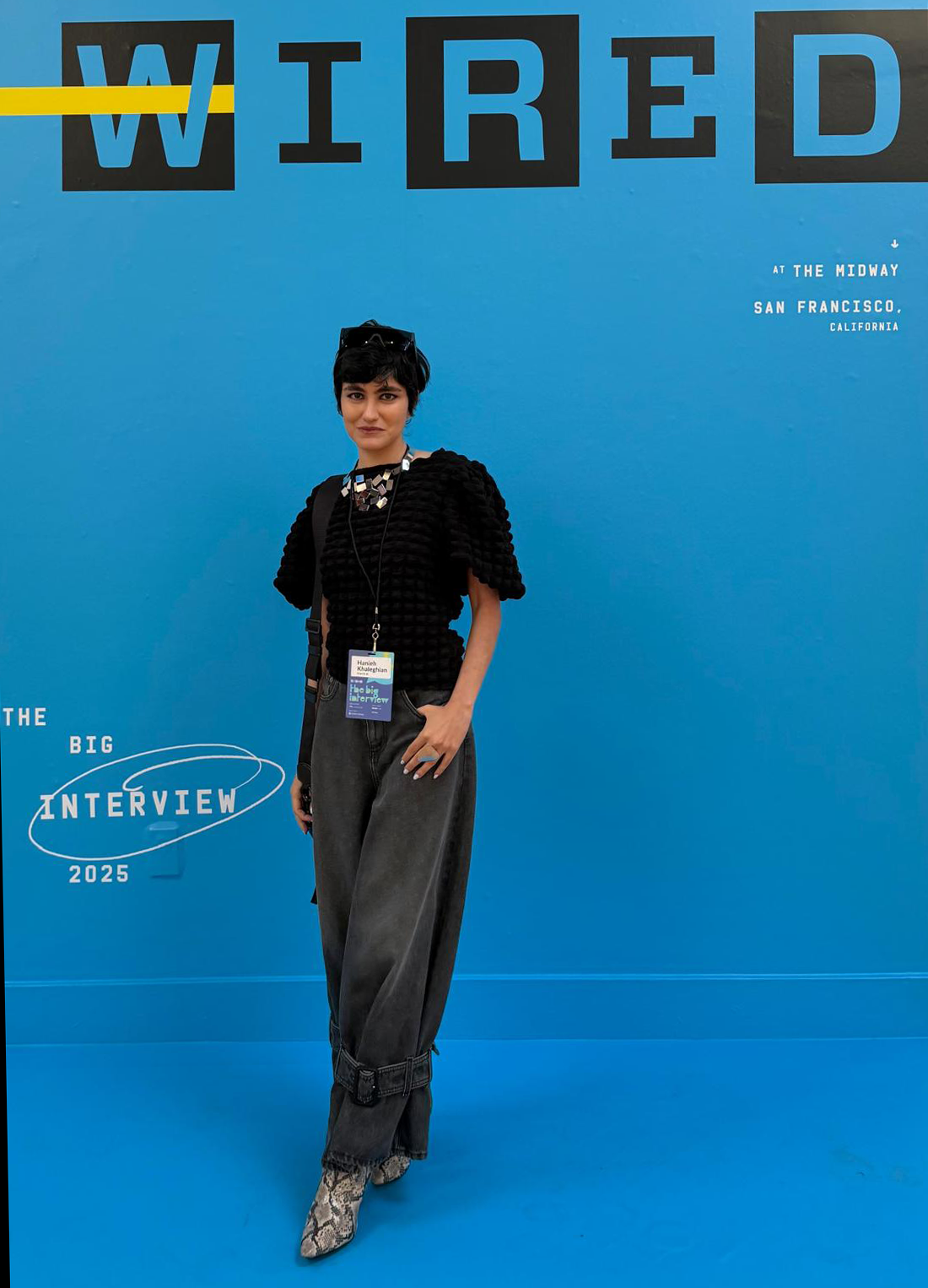
WIRED Big Interview backdrop
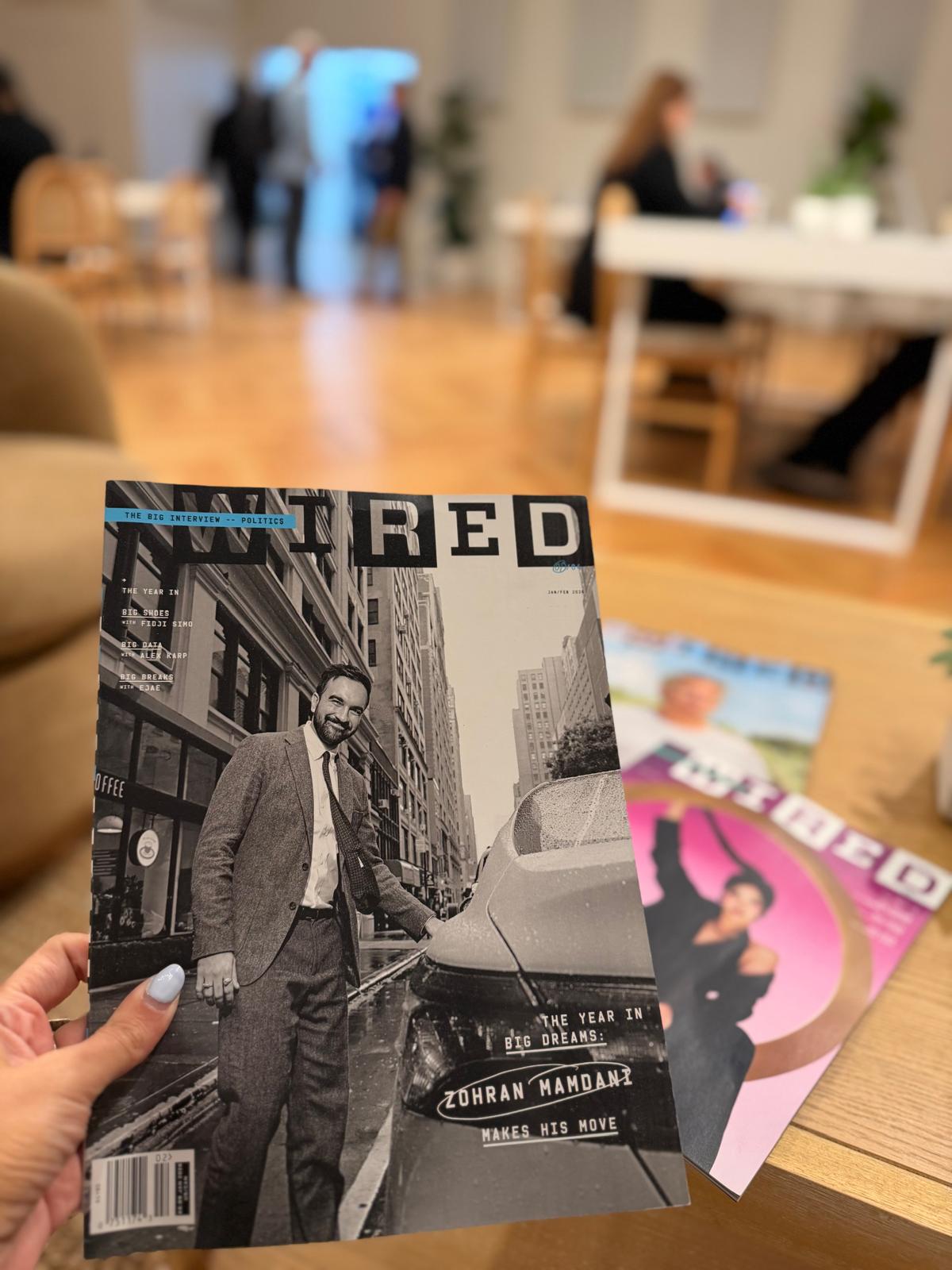
WIRED magazine at the event
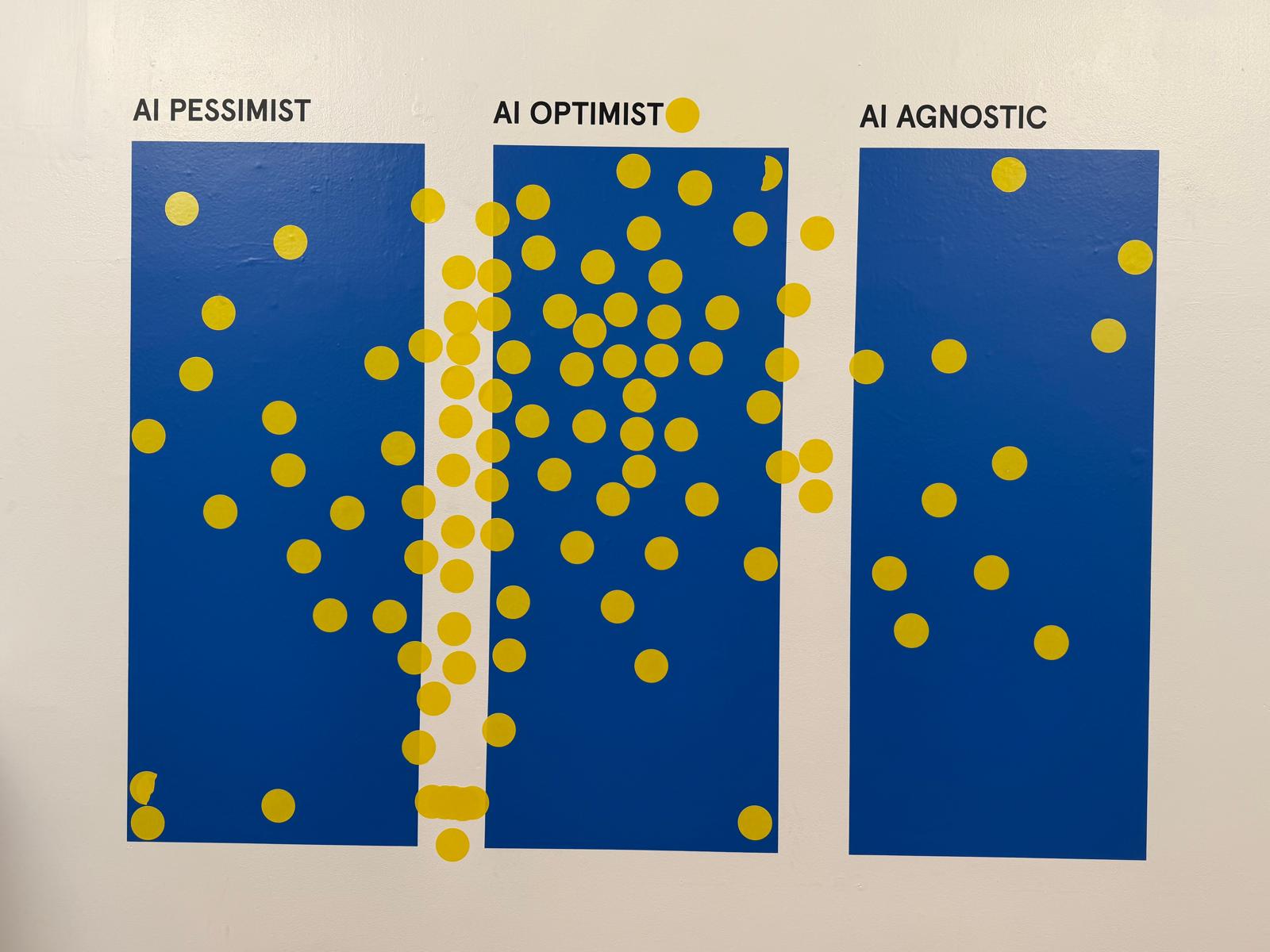
AI Pessimist · AI Optimist · AI Agnostic

The venue at The Midway, San Francisco